
One of the secrets to Holling’s enduring interest by young people is his simplified vocabulary. Dr. Seuss—Theodor Geisel—also realized this with his severely truncated lexicon in stories like The Cat in the Hat.
Holling’s Paddle-to-the-Sea has a Fog Index of 6.9, meaning 91% of everyday words we use are more difficult to read. His Flesch Reading Index score is 75.2, meaning 90% of other vocabulary is harder. Similarly, only 5% of Holling’s words are “complex. His word choices have just 1.4 syllables per word. And, there are just 12.3 words per sentence.
This doesn’t mean Holling wrote down to youngsters or was patronizing. It does mean a fifth grader can easily pick up a Holling book and understand the story. Home schooling sources regularly cite Holling’s books for their educational value. But, to a nine-year-old, Holling is a captivating guide to new worlds.
(A note of thanks for to E.J. Hirsch, Jr. for What Your Fifth Grader Needs to Know: Fundamentals of a Good Fifth Grade Education, from which these statistics are cited.)
Monday, June 21, 2010

Wednesday, June 9, 2010
Putting Archival Pieces Together
The museum in Leslie has received numerous personal items from Holling family members that broaden our insights into Holling, the naturalist and artist.
Paddle-to-the-Sea, for example, was dedicated to a boy named John Chapman. Holling at one time canoed with young Chapman’s father from Chicago to the Upper Peninsula of Lake Michigan. They took with them just three modern implements: an ax, a knife and a cooking pot, Joan Hoffman wrote in her October 2008 newsletter. In 1920, Holling painted a picture in oil of those items plus his hat, moccasins, and rolled-up hat. The painting, now more than four-score years old, has been mounted in an acid-free mat and a better frame with UV glass.
Holling’s other art found multiple uses. A humorous watercolor of a monkey on a carousel horse was annotated, “Design for a child’s magazine.” Holling, she writes, painted 18 cover designs from March 1928 to August 1929 for Junior Home Magazine. Each issue of the magazine had a Holling story in prose or verse that expanded on the cover. Suspecting the watercolor was destined for this publication, Ms. Hoffman has found four copies on eBay. Platt and Munk, the publishers, bought the plates and stories. Some of these paintings, along with re-edited stories, showed up several years later in Children of Other Lands.
Was Holling’s verse as literary as his art was esthetic? Perhaps not, but it still could be appealing to a 10-year-old child. The poem below illustrated the Junior Home Magazine cover with the red bridge.
Fishing Club for Members Only
[The first, fifth and sixth quatrains]
Down past the orchard, and beyond the lumber mill,
Where Simpson’s Creek slips through the fence, and spreads out with a swish,
Down where the cow path turns below the old red bridge,
We’ve organized a fishing club for boys who like to fish.
But now some girls would like to join! Why, girls can’t bait a hook!
They call our finest fishing poles “just ordinary sticks.”
They hate to look at angle worms: they squeal, and scare the fish away;
And then they bring their cats, and cats and dogs don’t mix.
You see our club is limited, positively limited,
Because the fish are limited; there aren’t but twenty-two,
And what with cats, and little girls that want to join and don’t like dogs—
I wish I weren’t President—I don’t know what to do!
Paddle-to-the-Sea, for example, was dedicated to a boy named John Chapman. Holling at one time canoed with young Chapman’s father from Chicago to the Upper Peninsula of Lake Michigan. They took with them just three modern implements: an ax, a knife and a cooking pot, Joan Hoffman wrote in her October 2008 newsletter. In 1920, Holling painted a picture in oil of those items plus his hat, moccasins, and rolled-up hat. The painting, now more than four-score years old, has been mounted in an acid-free mat and a better frame with UV glass.
Holling’s other art found multiple uses. A humorous watercolor of a monkey on a carousel horse was annotated, “Design for a child’s magazine.” Holling, she writes, painted 18 cover designs from March 1928 to August 1929 for Junior Home Magazine. Each issue of the magazine had a Holling story in prose or verse that expanded on the cover. Suspecting the watercolor was destined for this publication, Ms. Hoffman has found four copies on eBay. Platt and Munk, the publishers, bought the plates and stories. Some of these paintings, along with re-edited stories, showed up several years later in Children of Other Lands.
Was Holling’s verse as literary as his art was esthetic? Perhaps not, but it still could be appealing to a 10-year-old child. The poem below illustrated the Junior Home Magazine cover with the red bridge.
Fishing Club for Members Only
[The first, fifth and sixth quatrains]
Down past the orchard, and beyond the lumber mill,
Where Simpson’s Creek slips through the fence, and spreads out with a swish,
Down where the cow path turns below the old red bridge,
We’ve organized a fishing club for boys who like to fish.
But now some girls would like to join! Why, girls can’t bait a hook!
They call our finest fishing poles “just ordinary sticks.”
They hate to look at angle worms: they squeal, and scare the fish away;
And then they bring their cats, and cats and dogs don’t mix.
You see our club is limited, positively limited,
Because the fish are limited; there aren’t but twenty-two,
And what with cats, and little girls that want to join and don’t like dogs—
I wish I weren’t President—I don’t know what to do!
Tuesday, May 25, 2010
Quaker’s Kiddie Cutouts
In order to help Quaker Oats sell more Puffed Wheat and Puffed Rice in the 1930s, Holling created a series called “American Frontiers.” The back and sides of each cereal box illustrated a famous wilderness explorer, a Native American of the region, a panorama of the country, dwellings of the period, and local animals. Children could cut out the figures and create their own diorama (but only after they'd eaten their cereal).
Joan Hoffman of the Leslie (Mich.) Museum brought this information to light after the museum acquired the tenth in the series, about Lewis and Clark, their guide and interpreter Sacajawea, the Rocky Mountains, an Indian camp, and regional animals.
The story, Joan says, was told in a small space at the bottom of the box:
“Louisiana. Vast. Unmapped. Canada clear to the Gulf. And none but the Indians knew it. . Spain’s men had found it. France held it. Then Spain. Then France. And we bought it. What held this platter of land? And where were the Rocky Mountains? Lewis and Clark would find out… Lewis knew men, and how to handle them, hungry. Clark knew wilderness as a flea the hairs on a dog. Their roustabouts couldn’t read Greek, but from St. Louis up the Missouri. Buffalo. Badlands. Plains endless. The cold. Rockies roaring in silence… And bird-woman, Sacajawea, babe on her back, guiding. Unraveling twisted Tongues… Clean to Oregon Coast. Bite of salt water… And Lewis and Clark – they lived both to be Governors. Why not? They had twirled the hemp for an endless rope of Frontiers.”
Purple prose, yes. And simplistic facts. But enough to thrill a child eating cereal. And enough to catch the attention of Houghton Mifflin, which would lead to a contract to write and illustrate Paddle-to-the-Sea.
If you have any other pieces in the American Frontiers series, please contact the Museum to exchange information: Ms. Joan Hoffman at ronandjoanhoffman@yahoo.com.
Joan Hoffman of the Leslie (Mich.) Museum brought this information to light after the museum acquired the tenth in the series, about Lewis and Clark, their guide and interpreter Sacajawea, the Rocky Mountains, an Indian camp, and regional animals.
The story, Joan says, was told in a small space at the bottom of the box:
“Louisiana. Vast. Unmapped. Canada clear to the Gulf. And none but the Indians knew it. . Spain’s men had found it. France held it. Then Spain. Then France. And we bought it. What held this platter of land? And where were the Rocky Mountains? Lewis and Clark would find out… Lewis knew men, and how to handle them, hungry. Clark knew wilderness as a flea the hairs on a dog. Their roustabouts couldn’t read Greek, but from St. Louis up the Missouri. Buffalo. Badlands. Plains endless. The cold. Rockies roaring in silence… And bird-woman, Sacajawea, babe on her back, guiding. Unraveling twisted Tongues… Clean to Oregon Coast. Bite of salt water… And Lewis and Clark – they lived both to be Governors. Why not? They had twirled the hemp for an endless rope of Frontiers.”
Purple prose, yes. And simplistic facts. But enough to thrill a child eating cereal. And enough to catch the attention of Houghton Mifflin, which would lead to a contract to write and illustrate Paddle-to-the-Sea.
If you have any other pieces in the American Frontiers series, please contact the Museum to exchange information: Ms. Joan Hoffman at ronandjoanhoffman@yahoo.com.
Monday, May 17, 2010
Looking for the Artist
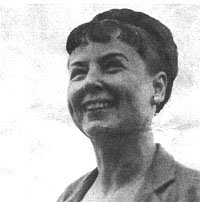
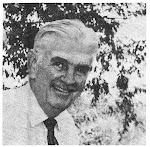
One of the “black holes” in trying to relate to Holling, the person, lies in discovering what he looked like. I found no images. Unusual for a published author--then or now--not to show up in a Web search! Joan Hoffman, of the Leslie Museum, sent me some answers last week, as seen at the left and below.
Her photos included Houghton Mifflin publicity portraits of Holling and Lucille Webster Holling in the 1950s and a May 2, 1937 newspaper picture of them looking over drawings to be presented in the “World Museum,” a new Examiner feature.
Meanwhile, Joan and the museum workers are under pressure preparing exhibits in time for a Leslie Chamber of Commerce luncheon and program from about noon to 2:00. “Then,” she writes, “a group of 6th graders will have their annual history scavenger hunt around town. They have local history questions to answer. Some of the answers will be found in the museum as well as from the town's businesses.” A Holling niece, Linda Raymond and her husband from Flint, Mich., will also visit this month.”
All of this shows that the memory of Holling and Lucille lives on among children of all ages.
Her photos included Houghton Mifflin publicity portraits of Holling and Lucille Webster Holling in the 1950s and a May 2, 1937 newspaper picture of them looking over drawings to be presented in the “World Museum,” a new Examiner feature.
Meanwhile, Joan and the museum workers are under pressure preparing exhibits in time for a Leslie Chamber of Commerce luncheon and program from about noon to 2:00. “Then,” she writes, “a group of 6th graders will have their annual history scavenger hunt around town. They have local history questions to answer. Some of the answers will be found in the museum as well as from the town's businesses.” A Holling niece, Linda Raymond and her husband from Flint, Mich., will also visit this month.”
All of this shows that the memory of Holling and Lucille lives on among children of all ages.
Thursday, May 6, 2010
Tracking Holling’s Work
One of the toughest tasks confronting anyone wanting to know more about Holling’s work is to find a complete professional résumé or bibliography. As I researched the man , I found disparate dates, omissions of his publishers, and details of his graphic output.
Now, this is coming together. Below is a complete—I hope—look at his output. The information on his advertising and promotional art comes largely from Joan Hoffman at the museum in Leslie, Mich. There are still a few remaining questions, as you’ll see. And, probably, more discoveries to be made.
Books:
New Mexico Made Easy with words of modern syllables, R.F. Clancy Co., 1923 *
Sun & Smoke: Verse and woodcuts of New Mexico, H. Clancy Holling, 1923 *
Little Big Bye-and-Bye, P.F. Volland, 1926 *
Roll Away Twins, P.F. Volland, 1927 *
Claws of the Thunderbird: A Tale of Three Lost Indians, P.F. Volland Co., 1928 *
Rocky Billy, The Story of the Bounding Career of a Rocky Mountain Goat, Macmillan, 1928 *
Choo-Me-Shoo, the Eskimo, Buzza, Co., 1928 *
The Blot: Little City Cat, by Phyllis Crawford, J. Cape & H. Smith, 1930 *
Twins Who Flew Around the World, Platt & Munk Co., 1931 *
Little Folks in Other Lands, by Watty Piper (a.k.a. Eulalie Page), Platt & Munk Co., 1932 *
The Road in Storyland, by Watty Piper, Platt & Munk, 1932 *
Book of Cowboys, by Holling C. Holling, Platt & Munk, illust. Lucille Holling, 1932
Children in Other Lands, by Watty Piper, Platt & Munk Co., 1933 * [poss. 1943?]
Folk Tales Children Love, by Watty Piper?, Platt & Munk Co., 1934 * [no illust. credit]
Book of Indians, by Holling C. Holling, Platt & Munk, illust. Lucille Holling, 1935
Rum-Tum-Tummy: The Elephant Who Ate, Saalfield Publishing, 1936 * [poss. 1927?]
Little Buffalo Boy, Garden City Publishing Co., 1939, illust. also by Lucille Holling *
Paddle-to-the-Sea. Houghton Mifflin, 1941 *
Tree in the Trail, Houghton Mifflin, 1942 *
Seabird, Houghton Mifflin, 1948 *
Minn of the Mississippi, Houghton Mifflin, 1951 *
Pagoo, Houghton Mifflin, 1957 *
The Magic Story Tree: A Favorite Collection of Fifteen Fairy Tales and Fables, publisher?
1964, illust. also by Lucille Holling *
* Illustrated by Holling C. Holling and written by him unless otherwise noted
Advertising Illustration:
Canadian Pacific Cruises, 1925 (booklet, poster, menu illustrated by Holling)
Cruise to the Gateway Round the World, 40 pp.booklet
Poster advertising the above cruise, 1925
Menu cover for the above cruise and Mediterranean & West Indies cruises
Levi Strauss, 1947-48
DeSoto
Packard Clipper, Saturday Evening Post, Jan. 30, 1932
Magazine covers:
Junior Home, March 1928- Aug. 1929
Child Life, Sept. 1932-1933
American Junior Red Cross News, some 1952-1960
American History Illustrated, Nov. 1974.“Climax of the Whale Hunt” from Seabird
Cutouts for Children:
World Museum dioramas, newspaper insert, Sunday weekly for a year 1937
World dioramas, boxed
Set of 5, American History Series
Set of 5, Foreign Land Series
Let’s Play Eskimo, 100 piece Eskimo Village, 1937
Quaker Oats, American Frontier Series, 12 explorers, 1930s
Quaker Oats, Travels with Time Series, 6 – 2 each land, sea, air
Young Forty-Niner, Gold Rush, Colgate-Palmolive-Peet Co., 1933
Murals:
2 murals on plaster from the home of Holling’s grandparents in Leslie
“The Fatal March”, Oct. 11, 1916
“Autumn’s Return”, Oct. 18, 1916
Ranch Restaurant, Chicago, Southwest theme , 1934
Hilton Hotel, Lubbock, TX, included Indian dances
Postcards:
Southwest Indian crafts- series on Yucca veneer by Lucille Holling
Southwest Indian dancers
Now, this is coming together. Below is a complete—I hope—look at his output. The information on his advertising and promotional art comes largely from Joan Hoffman at the museum in Leslie, Mich. There are still a few remaining questions, as you’ll see. And, probably, more discoveries to be made.
Books:
New Mexico Made Easy with words of modern syllables, R.F. Clancy Co., 1923 *
Sun & Smoke: Verse and woodcuts of New Mexico, H. Clancy Holling, 1923 *
Little Big Bye-and-Bye, P.F. Volland, 1926 *
Roll Away Twins, P.F. Volland, 1927 *
Claws of the Thunderbird: A Tale of Three Lost Indians, P.F. Volland Co., 1928 *
Rocky Billy, The Story of the Bounding Career of a Rocky Mountain Goat, Macmillan, 1928 *
Choo-Me-Shoo, the Eskimo, Buzza, Co., 1928 *
The Blot: Little City Cat, by Phyllis Crawford, J. Cape & H. Smith, 1930 *
Twins Who Flew Around the World, Platt & Munk Co., 1931 *
Little Folks in Other Lands, by Watty Piper (a.k.a. Eulalie Page), Platt & Munk Co., 1932 *
The Road in Storyland, by Watty Piper, Platt & Munk, 1932 *
Book of Cowboys, by Holling C. Holling, Platt & Munk, illust. Lucille Holling, 1932
Children in Other Lands, by Watty Piper, Platt & Munk Co., 1933 * [poss. 1943?]
Folk Tales Children Love, by Watty Piper?, Platt & Munk Co., 1934 * [no illust. credit]
Book of Indians, by Holling C. Holling, Platt & Munk, illust. Lucille Holling, 1935
Rum-Tum-Tummy: The Elephant Who Ate, Saalfield Publishing, 1936 * [poss. 1927?]
Little Buffalo Boy, Garden City Publishing Co., 1939, illust. also by Lucille Holling *
Paddle-to-the-Sea. Houghton Mifflin, 1941 *
Tree in the Trail, Houghton Mifflin, 1942 *
Seabird, Houghton Mifflin, 1948 *
Minn of the Mississippi, Houghton Mifflin, 1951 *
Pagoo, Houghton Mifflin, 1957 *
The Magic Story Tree: A Favorite Collection of Fifteen Fairy Tales and Fables, publisher?
1964, illust. also by Lucille Holling *
* Illustrated by Holling C. Holling and written by him unless otherwise noted
Advertising Illustration:
Canadian Pacific Cruises, 1925 (booklet, poster, menu illustrated by Holling)
Cruise to the Gateway Round the World, 40 pp.booklet
Poster advertising the above cruise, 1925
Menu cover for the above cruise and Mediterranean & West Indies cruises
Levi Strauss, 1947-48
DeSoto
Packard Clipper, Saturday Evening Post, Jan. 30, 1932
Magazine covers:
Junior Home, March 1928- Aug. 1929
Child Life, Sept. 1932-1933
American Junior Red Cross News, some 1952-1960
American History Illustrated, Nov. 1974.“Climax of the Whale Hunt” from Seabird
Cutouts for Children:
World Museum dioramas, newspaper insert, Sunday weekly for a year 1937
World dioramas, boxed
Set of 5, American History Series
Set of 5, Foreign Land Series
Let’s Play Eskimo, 100 piece Eskimo Village, 1937
Quaker Oats, American Frontier Series, 12 explorers, 1930s
Quaker Oats, Travels with Time Series, 6 – 2 each land, sea, air
Young Forty-Niner, Gold Rush, Colgate-Palmolive-Peet Co., 1933
Murals:
2 murals on plaster from the home of Holling’s grandparents in Leslie
“The Fatal March”, Oct. 11, 1916
“Autumn’s Return”, Oct. 18, 1916
Ranch Restaurant, Chicago, Southwest theme , 1934
Hilton Hotel, Lubbock, TX, included Indian dances
Postcards:
Southwest Indian crafts- series on Yucca veneer by Lucille Holling
Southwest Indian dancers
Wednesday, April 28, 2010
Paddle-to-the-Sea Park Dedication
Last September, residents and visitors gathered in Nipigon, Ontario, to dedicate a park where little Paddle-to-the-Sea began its journey. The community proudly unveiled a wooden sculpture commissioned for the occasion by from local chain saw artists.
The Paddle-to-the-Sea Park was more than 10 years in development, according to Joan Hoffman writing in the museum’s newsletter, Holling Collection News #6. The Grand Opening is scheduled for May 14, two weeks from now. Early reports are that kids love it, and grandparents have a hard time convincing them it’s time to leave.
For further information, contact Ms. Hoffman at ronandjoanhoffman@yahoo.com or http://www.nipigon.net. The Nipigon site carries multiple photos, directions and news.
The Paddle-to-the-Sea Park was more than 10 years in development, according to Joan Hoffman writing in the museum’s newsletter, Holling Collection News #6. The Grand Opening is scheduled for May 14, two weeks from now. Early reports are that kids love it, and grandparents have a hard time convincing them it’s time to leave.
For further information, contact Ms. Hoffman at ronandjoanhoffman@yahoo.com or http://www.nipigon.net. The Nipigon site carries multiple photos, directions and news.
Thursday, April 22, 2010
Mystery Solved! Jacket Belonged to HCH
I love a good mystery—detectives that pick up clues and all—so I was intrigued in January by an e-mail from a Chris Martin in California, asking whether Holling had served in the U.S. Army. He’d been given a jacket that might have belonged to Holling, who once lived in his neighborhood.
Beats me, I thought, wondering how he'd found me, but forwarded his message on to Joan Hoffman in Michigan and suggested she respond as well.
“Chris,” I wrote when he stated that he’d heard from her, “so glad to be a matchmaker. Joan Hoffman has been cc'ing me on her correspondence with you. I hope the [Army] jacket proves to be Holling's.”
The e-mails bounced back and forth almost daily. Holling had been in the Army for a short period during World War I and it was likely this was one he wore. Hoffman found a photo—and it matched the jacket!
On Jan. 24, Martin wrote to Hoffman as they arranged to have the jacket sent from Pasadena to Leslie, Mich., “I am glad it will be an addition to the museum. It's funny, this all came up because I was trying to find our copy of Paddle-to-the-Sea to read to my 9-year-old boy. I still have the hardbound copy my mom bought in the late 50s or early 60s at a bookstore in Pasadena, California. It was while looking for the book (plus my copies of Minn, and Tree in the Trail) that I came across the box with the coat in it. Now if I can only find the books I will be completely happy! Garages are museums in themselves.”
About two days later, the mystery was concluded with Martin’s e-mail to me: “As a wrap up, Joan and the museum have the coat and I found your review on I think Grinnell's [college library] website. I had been Googling Holling’s name looking for a CD version of an audio recording of Paddle-to-the-Sea done by Liona Boyd.
“I'm finding other people who know about Holling and his genius is a real treat. I am still trying to find my original hardbounds of Holling's books to read to my 9-year-old. My mom bought them at Vroman's Books in Pasadena probably in the late 50s or early 60s. Like the coat, the books are in a box somewhere in the garage, however unfortunately I am the curator of that museum and haven't a clue.”
Joan Hoffman replied to our new-found friend, “I understand about home museums. Our basement and barn certainly qualify. Hopefully you will find the three Holling books in your garage. They very possibly could be original editions and who knows, perhaps Holling signed them. He often did that at books stores when his books first came out. But most important, your son is at a good age for those Houghton Mifflin books.”
I wrote to Martin a day or two later, “Joan Hoffman e-mailed me and was searching for an address so their museum secretary could send you a snail mail thank-you. HCH was a part of my growing up, and no one was more surprised than I to find Amazon still carries many of his titles—and at about the same price. Vroman's book store also brought back memories of when I was in the 9th grade in South Pasadena.”
I added, “If you want another treat, Google Lucille Holling images. She illustrated many of Hecht’s books, but was a grand plein air illustrator in her own right. Her painting of the biplane flying over the California coast is on my ‘must have’ list of posters. Again, I'm so very glad to have been the ‘marriage broker’ to get that coat to Michigan!”
Each person’s encounter with Holling’s books always seems to bring out unique memories.
Martin wrote on Feb. 26, “All I need out of all of this is the hope that other kids read these books. We are in a day when many of these older books aren't considered the correct things to be reading but my fascination with those books was much a result of the fabulous illustrations.
“My older son (now 17) loves to this day Paddle-to-the-Sea. When he was about 9 in Cub Scouts he and I got a hard piece of Douglas fir about 2 feet long, and over several months whittled it down into a canoe with a Native American seated in it (my excuse to my wife for getting a decent Dremel tool). After painting and sealing we gave it to a friend who took it to Hawaii. As far as I know he hooked up there with a marine biologist at an Aquarium who promised to set ‘Paddle’ free about 100 miles off shore. We engraved our then Post Office box on the bottom and a note just like in the book but after eight years I doubt it's even legible if he is still at sea. It could still be floating around out there somewhere. The things dreams are made of.”
Martin wrote to Hoffman on Mar. 1, “Really isn't so much of a gift, just sending on something that Holling may have inadvertently laid aside—I hope he didn't mean to throw it away—but as a bit of a history buff I understand the horror and carnage of World War I might lead anyone to put aside the vestiges of that sort of thing.
“I have made a new acquaintance of yourself and Walt and finding people who enjoy Holling's work is a great reward! I am going to look into Walt's recommendation of finding some of Lucille's posters if they are still in print.”
Sadly, Joan Hoffman notes, “the museum has been closed now nine months. While wooden cabinets, glass display and file cabinets were moved back in during January, that's as far as it went. The flood in late May 2009 really hit the workers hard. The enthusiasm died. The funds we had were eaten up by legal costs to get our museum charter and original start up costs. Another factor right now is next year the village celebrates its 175 anniversary. Village groups are rallying around that anniversary with plans to raise funds for all sorts of events for the three- day events and the museum isn't getting any attention.
“I have been the only one doing much about a museum collection. The Holling Collection now far exceeds the space the museum has for it. I will have to rotate what is displayed. I have picked up much of the collection cost outside of the large donation of items by the two nieces. I'm not complaining; it has been by choice. Often there were opportunities to obtain something that might not come around again.”
One takeaway from this exchange has been to seize the moment and act on it. Have no regrets for leaving things undone—or mail unanswered.
Beats me, I thought, wondering how he'd found me, but forwarded his message on to Joan Hoffman in Michigan and suggested she respond as well.
“Chris,” I wrote when he stated that he’d heard from her, “so glad to be a matchmaker. Joan Hoffman has been cc'ing me on her correspondence with you. I hope the [Army] jacket proves to be Holling's.”
The e-mails bounced back and forth almost daily. Holling had been in the Army for a short period during World War I and it was likely this was one he wore. Hoffman found a photo—and it matched the jacket!
On Jan. 24, Martin wrote to Hoffman as they arranged to have the jacket sent from Pasadena to Leslie, Mich., “I am glad it will be an addition to the museum. It's funny, this all came up because I was trying to find our copy of Paddle-to-the-Sea to read to my 9-year-old boy. I still have the hardbound copy my mom bought in the late 50s or early 60s at a bookstore in Pasadena, California. It was while looking for the book (plus my copies of Minn, and Tree in the Trail) that I came across the box with the coat in it. Now if I can only find the books I will be completely happy! Garages are museums in themselves.”
About two days later, the mystery was concluded with Martin’s e-mail to me: “As a wrap up, Joan and the museum have the coat and I found your review on I think Grinnell's [college library] website. I had been Googling Holling’s name looking for a CD version of an audio recording of Paddle-to-the-Sea done by Liona Boyd.
“I'm finding other people who know about Holling and his genius is a real treat. I am still trying to find my original hardbounds of Holling's books to read to my 9-year-old. My mom bought them at Vroman's Books in Pasadena probably in the late 50s or early 60s. Like the coat, the books are in a box somewhere in the garage, however unfortunately I am the curator of that museum and haven't a clue.”
Joan Hoffman replied to our new-found friend, “I understand about home museums. Our basement and barn certainly qualify. Hopefully you will find the three Holling books in your garage. They very possibly could be original editions and who knows, perhaps Holling signed them. He often did that at books stores when his books first came out. But most important, your son is at a good age for those Houghton Mifflin books.”
I wrote to Martin a day or two later, “Joan Hoffman e-mailed me and was searching for an address so their museum secretary could send you a snail mail thank-you. HCH was a part of my growing up, and no one was more surprised than I to find Amazon still carries many of his titles—and at about the same price. Vroman's book store also brought back memories of when I was in the 9th grade in South Pasadena.”
I added, “If you want another treat, Google Lucille Holling images. She illustrated many of Hecht’s books, but was a grand plein air illustrator in her own right. Her painting of the biplane flying over the California coast is on my ‘must have’ list of posters. Again, I'm so very glad to have been the ‘marriage broker’ to get that coat to Michigan!”
Each person’s encounter with Holling’s books always seems to bring out unique memories.
Martin wrote on Feb. 26, “All I need out of all of this is the hope that other kids read these books. We are in a day when many of these older books aren't considered the correct things to be reading but my fascination with those books was much a result of the fabulous illustrations.
“My older son (now 17) loves to this day Paddle-to-the-Sea. When he was about 9 in Cub Scouts he and I got a hard piece of Douglas fir about 2 feet long, and over several months whittled it down into a canoe with a Native American seated in it (my excuse to my wife for getting a decent Dremel tool). After painting and sealing we gave it to a friend who took it to Hawaii. As far as I know he hooked up there with a marine biologist at an Aquarium who promised to set ‘Paddle’ free about 100 miles off shore. We engraved our then Post Office box on the bottom and a note just like in the book but after eight years I doubt it's even legible if he is still at sea. It could still be floating around out there somewhere. The things dreams are made of.”
Martin wrote to Hoffman on Mar. 1, “Really isn't so much of a gift, just sending on something that Holling may have inadvertently laid aside—I hope he didn't mean to throw it away—but as a bit of a history buff I understand the horror and carnage of World War I might lead anyone to put aside the vestiges of that sort of thing.
“I have made a new acquaintance of yourself and Walt and finding people who enjoy Holling's work is a great reward! I am going to look into Walt's recommendation of finding some of Lucille's posters if they are still in print.”
Sadly, Joan Hoffman notes, “the museum has been closed now nine months. While wooden cabinets, glass display and file cabinets were moved back in during January, that's as far as it went. The flood in late May 2009 really hit the workers hard. The enthusiasm died. The funds we had were eaten up by legal costs to get our museum charter and original start up costs. Another factor right now is next year the village celebrates its 175 anniversary. Village groups are rallying around that anniversary with plans to raise funds for all sorts of events for the three- day events and the museum isn't getting any attention.
“I have been the only one doing much about a museum collection. The Holling Collection now far exceeds the space the museum has for it. I will have to rotate what is displayed. I have picked up much of the collection cost outside of the large donation of items by the two nieces. I'm not complaining; it has been by choice. Often there were opportunities to obtain something that might not come around again.”
One takeaway from this exchange has been to seize the moment and act on it. Have no regrets for leaving things undone—or mail unanswered.
Subscribe to:
Posts (Atom)