Become a Fan

A growing number of people who love children's stories, nature writing and Americana are turning to Holling as a timeless teacher of geography, culture, history, and adventure. Become a fan and continue sharing the excitement!


Showing posts with label Holling Clancy Holling. Show all posts

Monday, April 23, 2012

Behind Every Successful Man…


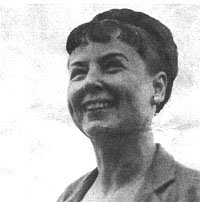
While there’s an increasing volume of information concerning Holling Clancy Holling, there is much less biographical data on Lucille Webster, his wife. Yet, Lucille was an artist and professional in every way — and some of Holling’s success must be accorded to her.

Lucille Webster was born on Dec. 8, 1900, in Valparaiso, Ind. In Chicago, she designed theatrical scenery and costumes, and drew for fashion publications. A mutual friend introduced Holling to Lucille and her older sister who shared an art studio in the city. She remembers going out with Holling on a nice first date at a Chinese restaurant, but it wasn’t until she attended the Art Institute the following year that Holling was re-introduced to her during one of the open houses the girls had. That night, Holling and Lucille planned a world tour and began seeing each other steadily.

While Holling grew up in rural Michigan in a large family of devoted Methodists, Lucille was in some ways his opposite. She was a city girl whose father and a baby brother died early. There was no apparent religious observance. She had one sister, also an artist but reportedly unstable.


Still, they were married in 1925. The following year, the couple went on the first University World Cruise, where she designed for the drama department.

She and Holling became a couple in every sense of the word, as together they produced national advertising art and foreign travel brochures. Lucille illustrated a number of books for other authors, including Kimo, the Whistling Boy by Alice Cooper Bailey (1928); Songs from around a Toadstool Table by Rowena Bastin Bennett (1930); and the cover of Oriental Stories, a pulp magazine (1931). Together with Holling, she also illustrated textbooks. Among the Hollings' joint publications are Choo-Me-Shoo (1928), The Book of Indians (1935) and The Book of Cowboys (1936).


Joan Hoffman notes that Lucille made a specific contributions to two Houghton Mifflin books. “In Pagoo, all those microscopic drawings are hers and her name appears along with Holling's as illustrator on the title page. In the acknowledgment for Tree in the Trail, Holling gives Lucille credit for helping to complete the illustrations, research on trail data and for designing the colored map at the end.” Holling confessed, Joan says, “that Lucille draws women and children better than I do.”

While Holling had come from an extended family, Lucille seemed to have less family involvement. This may have been a reason Lucille wanted to settle down and have a home before Holling did. Moving to California, she worked with her husband on books. In 1951, she designed and oversaw the construction of their studio residence — their first home — in Pasadena. She died on 31 December 1989. Sadly, the Hollings had no children.

Wednesday, April 18, 2012

Keeping a Legend Alive in Michigan

Before going further into some developments taking place regarding Holling’s career, I want to stop and credit the work being done in Leslie, Mich. Holling’s home town is also the home of the Leslie Area Historical Museum and a special area devoted to Holling's art, writing and achievements.

Joan Hoffman, who curates the Holling collection, describes activities there. “The Leslie Area Historical Museum operates under the charter, constitution and by-laws of the Leslie Area Historical Society. The museum workers are custodians of the many historical items, which are cataloged, displayed and properly cared for. The City of Leslie has provided the space we use."

Joan Hoffman


“The Society's function is more fund-raising and lining up public historical programs. They played a big part in the recent 175th anniversary of Leslie. It was Steve Hainstock's vision and effort that initiated both the Society and Museum in 2007. He has a wealth of historical knowledge, and we look to him often for guidance.

“Leslie is a small town,” Joan says. “A major highway once went through town. Since Route 127 was moved to the west and hooked up with the Interstate highway system, many businesses that once were in Leslie are now gone. It seems to me Leslie is looking for its identity like many towns where the major road now bypasses them. Leslie and the area have a lot of history, and that is what a few of us are trying to promote.”

One function of the museum is to be there for visitors, serving individuals and groups. “Groups like Scouts come yearly. We have school groups sometimes and the Chamber of Commerce once a year. One of our people is particularly good at genealogy and maintains a file on families. We work with the town library and have had small displays in their display case, and for awhile we had displays in a vacant store front.”

The Historical Society and Holling collection is housed in the G.A.R. (Grand Army of the Republic) building represented in this postcard. This is on Bellevue, a short distance east of Main St.

“Above the upper window arch,” Joan points out, “are 13 upright rectangular stones that follow that curve. Those represent the thirteen original states. The pole that looks like it divides the window and the 13 stones is a flagpole.


There are only two floors, none at ground level. The museum is in a room in the basement. “See what looks like grates to the left of the steps?” she asks. “Those are our basement museum windows. The corner stone just to the left of the basement windows says 1903.”

If you’re traveling through southern Michigan, you’re invited to take a little time to visit the Holling collection and learn more about one of America’s favorite writers. The Leslie Area Historical Museum is at 107 E. Bellevue Rd., P.O. Box 275, Leslie, MI 49251; 517-589-5220.

Saturday, March 24, 2012

Pictures and Verse from the Past: Follow-up

It is, of course, a major discovery to find a previously unknown daVinci mural hidden behind a painting done years afterwards. But to bibliophiles who cherish Holling’s writing, painting and craftsmanship, it’s equally thrilling to find another copy of a long-lost book after 89 years.


Heather Heath in Livingston, Mont., found Sun and Smoke among donated books, then tracked down the Leslie Area Museum. (Photo by AP)

Heather Heath found Sun and Smoke: a Book of New Mexico Verse among donations to the Community Closet thrift shop in Livingston, Mont. She was the detective who set it aside for further examination, knowing there was something special about the limited edition work. She learned from the online auction site, eBay, that an estimated the value might be $235. This news began making the area papers. Associated Press writer Liz Kearney, chronicling the discovery, notes that Heath wondered at the inscription in the book: “To Florence and Dan, in memory of the 711 Ranch.” Who were Florence and Dan, had Holling ever visited Montana, and where was the 711 Ranch?

Heath then searched the Internet for information about Holling. (She may even have visited this blog.) From biographical information about Holling’s birthplace, she then tracked down Steve Hainstock, a past president and co-founder of the Leslie Area Museum in Michigan. He told her Sun and Smoke was the only book which the museum did not have. Heath stated in the AP story, “It was exciting to get this gentleman on the phone and hear him say ‘Wow!’”

In the spirit of the Community Closet’s policy of sharing with other nonprofits, Executive Director Caron Cooper secured permission to donate the book to the Leslie Area Museum. The folks in Leslie are eagerly awaiting an opportunity to see the verses and art Holling created over three-quarters of a century ago.

A story like this might have remained localized in Livingston, Mont., and Leslie, Mich. Happily, we live in a digital age, when search engines bring the world to our fingertips, communication links span vast distances, and the past is easily accessed by interested audiences everywhere. With so much sad news and tension in the world, it’s satisfying to know a writer like Holling Clancy Holling is still extolling the panorama that is America. And that one more view — of New Mexico in verse and art — has come to light.

Note: Sun and Smoke arrived in Leslie Friday, Mar. 23. Joan Hoffman said, “I went over to the Hainstocks’ house and saw it as the box was opened. The spine of the book is not good, so the book is in quite fragile condition. Steve plans to scan the pages so it won’t have to be handled further.”

Monday, March 12, 2012

Breaking News: Pictures and Verse from the Past


A copy of Sun and Smoke: A Book of New Mexico has appeared! This is momentous news, as only 50 copies of Holling’s handmade book were published in 1923. Four copies are in university libraries and a fifth was sold last year by a rare books dealer.

On Feb. 8, Joan Hoffman learned that “a woman in Montana found a copy of Holling’s rare book in the thrift shop where she works.” A month later, Joan received a call and discovered “they’re donating the book to the Leslie Historical Museum. We were not sure we would get it, and certainly didn’t expect it to be an outright gift.” The book's delivery will be delayed at least until the local press is able to cover the story.

Sun and Smoke was created as a printing arts project when Holling was at the Art Institute of Chicago. The subject matter drew on the preceding months Holling had been in New Mexico. He had traveled extensively by horseback, took in the Taos art scene (and began appreciating color in his own painting), and worked at the ranch where he and Lucille Webster Holling were staying. He wrote the verses, carved wood blocks out of maple to illustrate and decorate the poems, and printed the 36-page book on hand-laid Fabriano paper from Italy. Both the printing and binding — culminating in a 6-1/2 by 10-1/4-inch book — were performed by Holling himself. This was truly an epic example of Holling’s craftsmanship.

Joan comments, “ I know Holling wanted to preserve his impressions of time spent in New Mexico, which he did in Sun and Smoke. I am anxious to see the poems and illustrations he used.”

We all are.

Friday, March 2, 2012

No One Gets Mad Because the Writing Is Too Simple


In the introduction to Dr. Seuss’s The Bippolo Seed and Other Lost Stories, scholar Charles D. Cohen mentions a three-year-old who recited an entire Seuss story! The epiphany for author Theodor Geisel was that children absorb amazing volumes of information through their ears — lesser amounts through their eyes.

Key to Holling’s success was a Fog reading index of 6.9 — meaning that 91 percent of everyday words we use are more difficult. Only 5 percent of Holling’s words are foreign or complex. His choices average just 1.4 syllables per word. And, there are just 12.3 words per sentence.

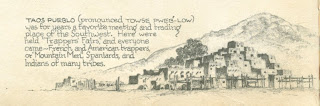
It’s sometimes difficult to slide past polysyllabic environmental terms, or words in other languages. But Holling helps us in those instances, too. Tree in the Trail contains an amazing wealth of sidebar illustrations that explain history or define place names. In describing Coronado’s search for gold [chap. 5; unpaginated], he mentions an Indian town, Zuñi. The pronunciation — zoon-yee — is added parenthetically. Likewise, Santa Fe is spelled phonetically. Describing a Southwest trading and meeting place [chap. 9} he gives us Taos Pueblo and clarifies it as towse pweb-lo. This ease-of-entry is a secret to Holling’s enduring interest among young people and the home-schooled. Dr. Seuss, I think, would agree.

(A note of thanks for to E.J. Hirsch, Jr. for What Your Fifth Grader Needs to Know: Fundamentals of a Good Fifth Grade Education, from which these statistics are cited.)

Thursday, February 2, 2012

Forget Winter and Gaze at Lake Nipigon

A great part of our country is locked in cold and often-gray weather. We spend the winter months dreaming of spring, the return of migrating birds, and memories of swimming in warm waters. But remember: Paddle-to-the-Sea was born on a snowy hillside in Ontario.


If it will help you visualize Paddle’s home, take a moment to look at Lake Nipigon (from the Ontario Parks Dept.) and think of the adventurous route Paddle-to-the-Sea took.

This comes alive again in Deborah Cramer’s commentary that “we are connected to the ocean even if we can’t see it.” She writes (at http://seaaroundyou.com/paddle-to-the-sea/), “In this beloved children’s book, first published in 1941 but still in print, an Indian boy living in the Canadian wilderness near Lake Nipigon carves a canoe and a paddler. When he hears the cry of wild geese returning at the end of winter, he places Paddle-to-the-Sea on a snowy hill behind his home, facing south.”

Ms. Cramer is the author of Great Waters: An Atlantic Passage. Her description of Paddle’s route takes us again through Lake Superior and into Lakes Michigan, Huron, Erie and Ontario, dropping hundreds of feet through rough waters and calm eddies. Holling symbolically illustrated this wealth of clean water in his sidebar comparing the Great Lakes to cups pouring into each other.

She warns, however, that the “watery lifeline” between Paddle-to-the-Sea’s Nipigon River and the ocean are in danger. “If the earth continues to warm, water levels in the Great Lakes will drop. Tiny Paddle-to-the-Sea might make the long journey, but the shallower water may inhibit large cargo ships that ply the waters of the Great Lakes today.”

You can choose whether Holling was first an illustrator, a magnificent storyteller or a naturalist. It's practically impossible to put priorities on a man who so artfully wove the three disciplines together. Paddle-to-the-Sea is as indelibly wedded to the Great Lakes, St. Lawrence Seaway and Atlantic Ocean as Minn was to the Mississippi, Tree in the Trail to the Great Plains, and Seabird to life in the north Atlantic. This is our heritage as much as it is the legacy of these timeless stories.

Deborah Cramer is the author of Smithsonian Ocean: Our Water Our World, the companion to the new Sant Ocean Hall at the National Museum of Natural History. She lives by the edge of the sea, is a visiting scholar at the Earth Systems Initiative at MIT, and speaks frequently to educators and the public about the meaning of the sea in our lives. More information about her and her work can be found at http://deborahcramer.com/

Wednesday, September 14, 2011

Another Day in the Art-Detective Agency

Joan Hoffman’s September 2011 Newsletter just arrived, which tickled a number of thoughts that I’ll share here. She mentioned our correspondence with someone asking about a piece of art he had uncovered in a garage/estate sale. Holling did so much commercial work that it’s difficult to identify every item he illustrated, but this is the back story to one find:

I received a letter from Glen Webster stating, “I recently unearthed what appears to be an original HCH illustration. During my research I found your blog and hoped you might be able to help me identify it.”

The job was beyond my abilities, so I forwarded Glen’s letter to Joan Hoffman with a cc back to Glen to keep him in the loop.

Glen responded that he “purchased it in a garage sale in Oklahoma City. The illustration is framed, approximately 14 x 17” in size, with an actual image of 13 x 8”. It appears to him to have been drawn with a black felt tip pen or ink and colored with watercolors. Glen had begun his own research, and reported, “I’ve only been able to find one auction result in a 1997 Davenport’s Art Reference of $300 to $700.”

Joan cautioned, “A large part of Holling's work was commercial art, particularly in the 1930s, and that is the least known fact about his life for most people.” She judged it was a pen-and-ink illustration with watercolor. The subject details and signature also confirmed Holling. But a date would be a valuable clue since Holling’s life is pretty well dated and he legally changed his name — to Holling Clancy Holling — after 1925.

The signature style is a clue to the date, but Holling was creative in many ways, including his signature. It’s sometimes very plain and often needs to be hunted for. In one oriental painting, the signature resembled oriental characters.


On a few occasions, Holling painted a piece to be framed and sold. One documented case was a rodeo in winter when Holling made cowboy pictures for sale. He sketched and Lucille, his wife, filled in the watercolor. End of story, except for the serendipitous discovery of another Holling painting.

Subsequently, Joan mentions she has acquired the June 1933 cover of Child Life with a marionette scene by Lucille Holling, Holling’s wife and career partner. Holling also contributed art to the Century of Progress Exposition Official View Book of 1933. Joan says, “I never expected in my senior years to be surfing eBay for Holling items or in my worst nightmare trying to outbid someone on an auction item. But sometimes you just do what you have to do, and it has paid off.”

Wednesday, August 10, 2011

Do Curators Suffer Insomnia Trying to Catalogue Art?


I’m a collector of smallish things, so I’m sympathetic to Joan Hoffman, curator of the Holling Clancy Holling Museum in Leslie, Michigan. Joan writes frequently that she’s found items Holling illustrated. Such things as a toy punch out of an elephant designed to fit on one end of a Kitchen Klenzer can, with the other end of the elephant on the opposite end. (Since 1894, Fitzpatrick Bros., Inc. has provided quality scouring cleansers including the industry original, Kitchen Klenzer.)

A decorative blanket goes over the middle, a dress-up monkey to perch on top, and a short story about elephants on the back. The animal parts and stand are cardboard; the blankets are paper, being more flexible to cover the middle section of the can. The blanket part, being of a lighter material, is separate from the cardboard animal parts.

This 1932 advertising giveaway is precious today in filling out Holling’s body of work. Joan bought the elephant “knowing Holling was especially fond of this animal going back to his first circus at the age of five.” A camel, lion and zebra comprise the total collection.

She wrote last year, “I was 99.5 percent sure this was a Holling item when I saw it on the Internet. The style and colors were definitely Holling. Then, one of my co-workers at the museum spotted the tiny HCH initials on the hind foot of the elephant I had purchased.”


Success! But this is where insomnia comes in. For some reason, the dealer sent the elephant but not the blanket. Joan did receive blankets for the camel and lion. Joan e-mailed back and it turned out there was no elephant blanket. Now the dealer couldn’t sell the camel and lion because she had no blankets. The dealer told Joan, “Send back the elephant and the two blankets and I’ll give you a refund plus postage. Plus a future discount should you want to buy something.”

“As you know,” Joan reported, “I especially wanted Holling's elephant because of his fondness for the animal. While not sleeping I thought up a possible solution. If I bought the camel using the future discount, kept the camel blanket and sent her the lion blanket, what would I owe her for the camel? She gave me a very low price, probably to get rid of me. So I have a complete camel set and an elephant without a blanket.”

As you might think, it’s not easy being passionate about an elusive artist.

Thursday, December 23, 2010

HCH Information to ABC Organization

It was so nice to see my short letter on Holling Clancy Holling become an article in the American Book Collectors of Chidlrens' Literature spring/fall 2010 newsletter, at http://www.abcocl.org/newsletter.htm.

Billie Levy, the editor, published an earlier article on Holling several years ago, and this helps keep the writer/artist's memory alive. Little by little, more of holling's work is being uncovered in what I can only call "literary archeology."

Friday, November 5, 2010

Paddle-to-the-Sea, Timeless

So much effort, time and money are plowed into education and entertainment that it’s refreshing to note a simple work of art like Paddle-to-the-Sea is now approaching its 70th birthday and is still very much in print. In fact, Amazon.com has reduced the price of the hardcover to $13.60 and the paperback $8.60 as of this writing.

And it’s still the same charming, wonderful story. Joan Hoffman writes from the museum in her fall newsletter that a Michigan teacher told her she is currently reading Paddle-to-the-Sea with her fourth graders. She goes on to say, “The beauty of the language is such an important connection to teaching them to be better writers through the use of descriptive adjectives, great verbs and all the wonderful comparisons he has.”

If you would like to receive the newsletter, contact Joan at ronandjoanhoffman@yahoo.com. This issue discusses the work Holling did for Walt Disney, his early canoeing experiences in the area where he grew up, and his later home in southern California.

Saturday, August 21, 2010

Holling’s Effect in Far Parts of the World

Joan Hoffman “introduced” me this week to a Holling fan who is a noted illustrator and portrait artist in his own right in New Zealand. I sent a note to Harmen Hielkema asking if he would elaborate on the influence Holling’s book had on his you. Below is the miniature memoir he sent back to me. I hope you enjoy it as much as I have.

On my 7th birthday my grandfather, Henk Oostenrijk from the Netherlands, sent me a book voucher.

My mother and father took me to a bookstore in Auckland City where I chose Seabird, a beautiful, hard cover book for children written and illustrated by Holling Clancy Holling and published by Collins on the subject of Whaling. My mother dedicated the book for me by writing my birth date and my grandfather’s name on the flyleaf.

I no longer have that original copy. It was donated without my knowledge or approval to a local school fundraising book auction when my children were still attending primary school.

It did solve my father’s problem of what to give me for my 8th birthday. My obsession that year with Seabird gave him the cue. I received from him a copy of Paddle to the Sea. The following year it was Tree in the Trail.

Those three books changed my life forever. Long before I fully appreciated the literary contents of those books I was gazing in awe at Holling’s illustrations, many of which I copied. Not only that, I began to build my own canoes--models at first, and then on to the real thing.

Like Holling, I had a curiosity about many things and this lead to an interest in the canoes and the people of the Pacific Ocean. I was compelled to make sailing models of outrigger canoes, whittled out of the dry, woody flowering stems of the flax plant that flourishes in the coastal areas of New Zealand. My friends and I would send them racing across the bay and watch them diminish, longingly wondering where they might eventually end up, as they dwindled from sight; out to sea.

My first real canoe was designed by New Zealand designer, Frank Pelin, and built to his plans by my father and me. That canoe was a 15 foot, plywood, hard chine adaptation of an American Indian birch bark canoe. I named that canoe Seabird, and the canoe taught me about boat handling from a very young age. I used two types of paddle, the double Eskimo kayak style and the other the traditional single paddle. My friends and I cruised the sheltered local waterways north of Auckland where we fished and camped all summer long.

Again much influenced by Holling’s realist style and parallel to his path, I chose a career as a commercial graphic artist and mural painter, which eventually led to sculpture as well. These activities— though not my true passion—helped me to put food on the table for my family.

As I write this, I am now in my 50s and I still cherish and collect copies of Holling’s work. I haunt the children’s section of secondhand bookshops and charity shops always on the lookout for another, yet unseen Holling publication. In this way I have found a 1935 first edition of The Book of Indians, a later Collins republication of the same title, and a 1948 first edition Houghton Mifflin edition of Seabird.

My continuing curiosity about Holling lead me to Walt Giersbach’s blog which seeks to illuminate that which was previously unknown about the life and work of Holling C. Holling and his wife Lucille. Now, thanks to the efforts of people like Joan Hoffman of Michigan and others, details and artifacts from Holling’s life are being collected, displayed, recorded and published so that more may benefit from Holling’s rich legacy, the body of work that he left for our benefit and enjoyment.

Thanks, Holling C. Holling for daring to follow your dream and so influence the lives of people like me so far away here in New Zealand.

[More on Harmen Hielkema can be found on his Outrigger canoe blog, http://harmenhielkema.blogspot.com/. Harmen's Art blog is www.harmen.co.nz, and his Music blog is http://harmensmusicblog.blogspot.com/. He lives in Rawene Hokianga, Northland, New Zealand.]

Tuesday, May 25, 2010

Quaker’s Kiddie Cutouts

In order to help Quaker Oats sell more Puffed Wheat and Puffed Rice in the 1930s, Holling created a series called “American Frontiers.” The back and sides of each cereal box illustrated a famous wilderness explorer, a Native American of the region, a panorama of the country, dwellings of the period, and local animals. Children could cut out the figures and create their own diorama (but only after they'd eaten their cereal).

Joan Hoffman of the Leslie (Mich.) Museum brought this information to light after the museum acquired the tenth in the series, about Lewis and Clark, their guide and interpreter Sacajawea, the Rocky Mountains, an Indian camp, and regional animals.

The story, Joan says, was told in a small space at the bottom of the box:

“Louisiana. Vast. Unmapped. Canada clear to the Gulf. And none but the Indians knew it. . Spain’s men had found it. France held it. Then Spain. Then France. And we bought it. What held this platter of land? And where were the Rocky Mountains? Lewis and Clark would find out… Lewis knew men, and how to handle them, hungry. Clark knew wilderness as a flea the hairs on a dog. Their roustabouts couldn’t read Greek, but from St. Louis up the Missouri. Buffalo. Badlands. Plains endless. The cold. Rockies roaring in silence… And bird-woman, Sacajawea, babe on her back, guiding. Unraveling twisted Tongues… Clean to Oregon Coast. Bite of salt water… And Lewis and Clark – they lived both to be Governors. Why not? They had twirled the hemp for an endless rope of Frontiers.”

Purple prose, yes. And simplistic facts. But enough to thrill a child eating cereal. And enough to catch the attention of Houghton Mifflin, which would lead to a contract to write and illustrate Paddle-to-the-Sea.

If you have any other pieces in the American Frontiers series, please contact the Museum to exchange information: Ms. Joan Hoffman at ronandjoanhoffman@yahoo.com.

Monday, May 17, 2010

Looking for the Artist

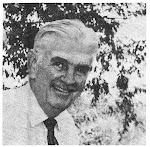
One of the “black holes” in trying to relate to Holling, the person, lies in discovering what he looked like. I found no images. Unusual for a published author--then or now--not to show up in a Web search! Joan Hoffman, of the Leslie Museum, sent me some answers last week, as seen at the left and below.

Her photos included Houghton Mifflin publicity portraits of Holling and Lucille Webster Holling in the 1950s and a May 2, 1937 newspaper picture of them looking over drawings to be presented in the “World Museum,” a new Examiner feature.

Meanwhile, Joan and the museum workers are under pressure preparing exhibits in time for a Leslie Chamber of Commerce luncheon and program from about noon to 2:00. “Then,” she writes, “a group of 6th graders will have their annual history scavenger hunt around town. They have local history questions to answer. Some of the answers will be found in the museum as well as from the town's businesses.” A Holling niece, Linda Raymond and her husband from Flint, Mich., will also visit this month.”

All of this shows that the memory of Holling and Lucille lives on among children of all ages.

Thursday, April 22, 2010

Mystery Solved! Jacket Belonged to HCH

I love a good mystery—detectives that pick up clues and all—so I was intrigued in January by an e-mail from a Chris Martin in California, asking whether Holling had served in the U.S. Army. He’d been given a jacket that might have belonged to Holling, who once lived in his neighborhood.

Beats me, I thought, wondering how he'd found me, but forwarded his message on to Joan Hoffman in Michigan and suggested she respond as well.

“Chris,” I wrote when he stated that he’d heard from her, “so glad to be a matchmaker. Joan Hoffman has been cc'ing me on her correspondence with you. I hope the [Army] jacket proves to be Holling's.”

The e-mails bounced back and forth almost daily. Holling had been in the Army for a short period during World War I and it was likely this was one he wore. Hoffman found a photo—and it matched the jacket!

On Jan. 24, Martin wrote to Hoffman as they arranged to have the jacket sent from Pasadena to Leslie, Mich., “I am glad it will be an addition to the museum. It's funny, this all came up because I was trying to find our copy of Paddle-to-the-Sea to read to my 9-year-old boy. I still have the hardbound copy my mom bought in the late 50s or early 60s at a bookstore in Pasadena, California. It was while looking for the book (plus my copies of Minn, and Tree in the Trail) that I came across the box with the coat in it. Now if I can only find the books I will be completely happy! Garages are museums in themselves.”

About two days later, the mystery was concluded with Martin’s e-mail to me: “As a wrap up, Joan and the museum have the coat and I found your review on I think Grinnell's [college library] website. I had been Googling Holling’s name looking for a CD version of an audio recording of Paddle-to-the-Sea done by Liona Boyd.

“I'm finding other people who know about Holling and his genius is a real treat. I am still trying to find my original hardbounds of Holling's books to read to my 9-year-old. My mom bought them at Vroman's Books in Pasadena probably in the late 50s or early 60s. Like the coat, the books are in a box somewhere in the garage, however unfortunately I am the curator of that museum and haven't a clue.”

Joan Hoffman replied to our new-found friend, “I understand about home museums. Our basement and barn certainly qualify. Hopefully you will find the three Holling books in your garage. They very possibly could be original editions and who knows, perhaps Holling signed them. He often did that at books stores when his books first came out. But most important, your son is at a good age for those Houghton Mifflin books.”

I wrote to Martin a day or two later, “Joan Hoffman e-mailed me and was searching for an address so their museum secretary could send you a snail mail thank-you. HCH was a part of my growing up, and no one was more surprised than I to find Amazon still carries many of his titles—and at about the same price. Vroman's book store also brought back memories of when I was in the 9th grade in South Pasadena.”

I added, “If you want another treat, Google Lucille Holling images. She illustrated many of Hecht’s books, but was a grand plein air illustrator in her own right. Her painting of the biplane flying over the California coast is on my ‘must have’ list of posters. Again, I'm so very glad to have been the ‘marriage broker’ to get that coat to Michigan!”

Each person’s encounter with Holling’s books always seems to bring out unique memories.
Martin wrote on Feb. 26, “All I need out of all of this is the hope that other kids read these books. We are in a day when many of these older books aren't considered the correct things to be reading but my fascination with those books was much a result of the fabulous illustrations.

“My older son (now 17) loves to this day Paddle-to-the-Sea. When he was about 9 in Cub Scouts he and I got a hard piece of Douglas fir about 2 feet long, and over several months whittled it down into a canoe with a Native American seated in it (my excuse to my wife for getting a decent Dremel tool). After painting and sealing we gave it to a friend who took it to Hawaii. As far as I know he hooked up there with a marine biologist at an Aquarium who promised to set ‘Paddle’ free about 100 miles off shore. We engraved our then Post Office box on the bottom and a note just like in the book but after eight years I doubt it's even legible if he is still at sea. It could still be floating around out there somewhere. The things dreams are made of.”

Martin wrote to Hoffman on Mar. 1, “Really isn't so much of a gift, just sending on something that Holling may have inadvertently laid aside—I hope he didn't mean to throw it away—but as a bit of a history buff I understand the horror and carnage of World War I might lead anyone to put aside the vestiges of that sort of thing.

“I have made a new acquaintance of yourself and Walt and finding people who enjoy Holling's work is a great reward! I am going to look into Walt's recommendation of finding some of Lucille's posters if they are still in print.”

Sadly, Joan Hoffman notes, “the museum has been closed now nine months. While wooden cabinets, glass display and file cabinets were moved back in during January, that's as far as it went. The flood in late May 2009 really hit the workers hard. The enthusiasm died. The funds we had were eaten up by legal costs to get our museum charter and original start up costs. Another factor right now is next year the village celebrates its 175 anniversary. Village groups are rallying around that anniversary with plans to raise funds for all sorts of events for the three- day events and the museum isn't getting any attention.

“I have been the only one doing much about a museum collection. The Holling Collection now far exceeds the space the museum has for it. I will have to rotate what is displayed. I have picked up much of the collection cost outside of the large donation of items by the two nieces. I'm not complaining; it has been by choice. Often there were opportunities to obtain something that might not come around again.”

One takeaway from this exchange has been to seize the moment and act on it. Have no regrets for leaving things undone—or mail unanswered.
Wednesday, April 21, 2010

Blessings from Strange Places

Joan Hoffman’s serendipity in the summer of 2009 was the discovery of Holling Clancy Holling murals that once decorated a Chicago restaurant. Such is the stuff of literary—or graphic—archeology that the author, painter and naturalist’s work continues to show up in the oddest places.

Holling Clancy Holling (Aug. 2, 1900-Sept. 7, 1973) has entranced seven decades of young readers with Paddle-to-the-Sea, Seabird, and other stories. Little has been chronicled about this Michigan-born writer who fell in love with the West. Still, Ms. Hoffman and kindred spirits have sustained the small Leslie Area Historical Museum in Leslie, Mich., to perpetuate his memory. And, bit by bit, strange finds keep popping up to broaden our awareness of Holling’s work.
She reports, “In early June, a gentleman, Bob Drake, from Colorado contacted me. In 1934, his grandfather, impressed with Holling’s knowledge of the Southwest, hired the Hollings [Holling and his wife Lucille] to decorate his new restaurant in Chicago that became known as the Ranch Restaurant. Incredibly, when the restaurant closed in the 1950s, Bob’s dad scraped some of the paintings, which had been painted on canvas, off the walls. These remained in an attic until Bob carted them off to Colorado. They now decorate the Drakes’ home. Bob was so kind to share excellent pictures of these murals. They are beautiful pieces of Holling art, mainly depicting Indian food gathering and hunting.”

Such is the detective work of investigators—and museum directors—tracking down elusive literary ephemera. Shortly after my article on Holling appeared in the ABC of Children’s Literature Fall 2008 newsletter, Ms. Hoffman wrote to me, “On [Jan. 21, 2009] one of the Quaker Oats American Frontiers cutouts series that I found on eBay came and I am real pleased with that because it is important in telling the story of Holling. That series opened the door for Holling to work with Houghton Mifflin. The one I got was #10 Lewis and Clark. Each of those showed the explorer, a native of the time (Sa-Ca-Ja-Wea, Bird Woman), a landscape view of the Rocky Mountains, and animals of the region (mule deer, coyote, coneys, mountain goat). Then [the cereal buyer] gets the whole story on what would be the bottom of the box (only 4 1/4 in. x 1 ¾ in.), by using only key words and short phrases.”

A 129-page master's thesis written by Hazel Gibb Hinman in 1958 at the University of Redlands California also contains clues Ms. Hoffman is following. Few children’s books writers enjoy financial comfort and Holling was no different. Ms. Hoffman notes that his illustrations included brochures for Cunard Tours, magazine covers for Junior Home Magazine, covers for American Junior Red Cross News, ads for Packard Clipper and Desoto, work on four projects at Disney Studios over several years, wall murals for the restraurant in Chicago and a hotel in Texas, designing a ranch in Montana, illustrations for Bookhouse, Book Trails, and Absurd Atlas, and the Quaker Oats marketing program.

Learning about the museum, a Holling niece recently donated some 200 Holling letters, original paintings, and colored World Museum newspaper inserts. Ms. Hoffman writes, “Those World Museum inserts are important because they finally allowed the Hollings to be financially independent so they could devote their full time to writing children's books.”

Ms. Hoffman can be proud of the clues Holling admirers provide. The memory of Holling and Lucille is still very much alive in Leslie, Mich., as elements of the past are collected, catalogued and presented to the public.

--Walt Giersbach
w.giersbach@att.net